Oopbuy Shipping & Customs Guide 2026 — Real Costs, Delivery Times & Will You Get Taxed?

Most buyers focus on the item price and forget that on a cross-border order the shipping and customs often add more than the product itself. That gap got wider in 2026, because several countries rolled back the duty-free thresholds that used to let small parcels slip through tax-free. This guide explains exactly how an agent calculates shipping, gives realistic cost and time ranges by line, and lays out the current customs rules so you know whether your oopbuy spreadsheet order will get taxed before you pay — not after it lands.
How Agent Shipping Cost Is Actually Calculated
Agents do not bill on the number off a kitchen scale. They bill on chargeable weight, which is the greater of two numbers:
- Actual weight — the real mass of the consolidated parcel in kg.
- Volumetric (dimensional) weight — length × width × height (cm) ÷ a divisor, usually 6000 for slower lines or 8000 for some express lanes.
A bulky, light item (a puffer jacket, a shoe box) is usually billed on volume; a dense item (denim, hardware) on actual weight. This is why consolidation — combining several items into one box so the agent can compress air and trim packaging — is the single biggest shipping saving available to you, often 20–40% versus shipping items separately.
Shipping Lines, Real Cost Ranges and Delivery Times (2026)
Exact pricing depends on weight tier, destination and the week, so treat these as realistic 2026 ranges rather than fixed quotes — always confirm the live number at checkout. The spreadsheet home page links straight to the agent's live shipping calculator.
| Line type | Typical cost | Delivery time | Best for |
|---|---|---|---|
| Sea line | $4–8 / kg | 30–50 days | Heavy, non-urgent hauls |
| Economy air | $7–14 / kg | 9–20 days | Most clothing orders |
| Standard air | $10–18 / kg | 7–14 days | Mixed parcels wanting balance |
| Express (DHL/FedEx/UPS) | $15–30 / kg | 3–7 days | Urgent or high-value items |
A Worked Example
Say you consolidate three items into one 2.0 kg box and pick an economy air line at $10/kg. Shipping is 2.0 × $10 = $20. If the box is bulky enough that its volumetric weight works out to 2.6 kg, you are billed on 2.6 kg instead — $26. Now add customs: if the declared value is $180 and you ship to a destination that taxes from the first dollar (see below), you also pay that country's duty and VAT on the goods value. The point is simple — budget the duty before you buy, because in 2026 it is no longer optional in most major markets.
Will Your Parcel Get Taxed? 2026 Customs Rules by Country
This is the part that changed most in 2026. Several governments ended or shrank the "de minimis" thresholds that let low-value parcels enter tax-free. Here is where the major destinations stand:
| Country | 2026 duty-free threshold | What you pay |
|---|---|---|
| 🇺🇸 United States | None — $800 exemption ended (China parcels May 2025, all origins 29 Aug 2025) | Duty on every parcel by value + country-of-origin tariff rate |
| 🇪🇺 EU | €150 ends 1 July 2026 (replaced by a flat duty per item) | VAT from €0 (via IOSS) + new flat customs duty on low-value items |
| 🇬🇧 UK | £135 (still in place through 2026; full removal planned later) | VAT applies from £0; duty above £135 |
| 🇨🇦 Canada | CAD $20 (CAD $150 for US/Mexico-origin under CUSMA) | Duty + GST/HST above the threshold |
| 🇦🇺 Australia | AUD $1,000 | 10% GST applies; duty above AUD $1,000 |
Sources: U.S. CBP e-commerce FAQ; EU Council of the EU (Dec 2025); UK gov.uk; Canada CBSA. Rules change — confirm with your national customs authority before ordering.
Watch: how the 2026 parcel-tax changes work
If the policy shifts are confusing, this short customs-industry explainer walks through what the end of duty-free parcels means in practice for shoppers:
Video: UK Import Reform 2026: VAT, Tariffs & the End of Duty-Free Parcels Explained — a plain-English explainer of the 2026 parcel-tax changes (credit: Ask The Customs Manager).

Five Ways to Keep Your 2026 Landed Cost Down
- Consolidate. One combined box almost always beats several small ones on both shipping and per-parcel handling.
- Match the line to the item. Sea for heavy and non-urgent; economy air for everyday clothing; express only when speed or value justifies it.
- Mind the volumetric trap. Ask the agent to compress bulky, light items so you are not billed on air.
- Budget duty up front. With the US exemption gone and the EU's €150 threshold ending in July 2026, assume tax applies and price it in.
- Declare honestly. Under-declaring value is the fastest way to get a parcel held, fined or seized — and it is not worth it on a flagged shipment.
FAQ
Will my Oopbuy parcel get taxed in the US in 2026?
How is the shipping cost calculated?
What's the cheapest way to ship a heavy haul?
Is the EU still duty-free under €150?
How long does delivery actually take?
Once you understand the shipping math and the 2026 tax rules, the agent you choose matters less than the line you pick — see our 2026 agent comparison to match the cheapest duty-paid line to your country, then browse the live spreadsheet to start your order.
Popular oopbuy Spreadsheet Products

Stone Island Toteline 102 Black Crossbody Bag with Compass Patch - 136597

Carhartt Active Jac 102784 Duck Work Jacket - Navy with Gray Collar - 133226

Carhartt Active Jac 102797 Water-Washed Denim Jacket - Gasoline Blue - 133913
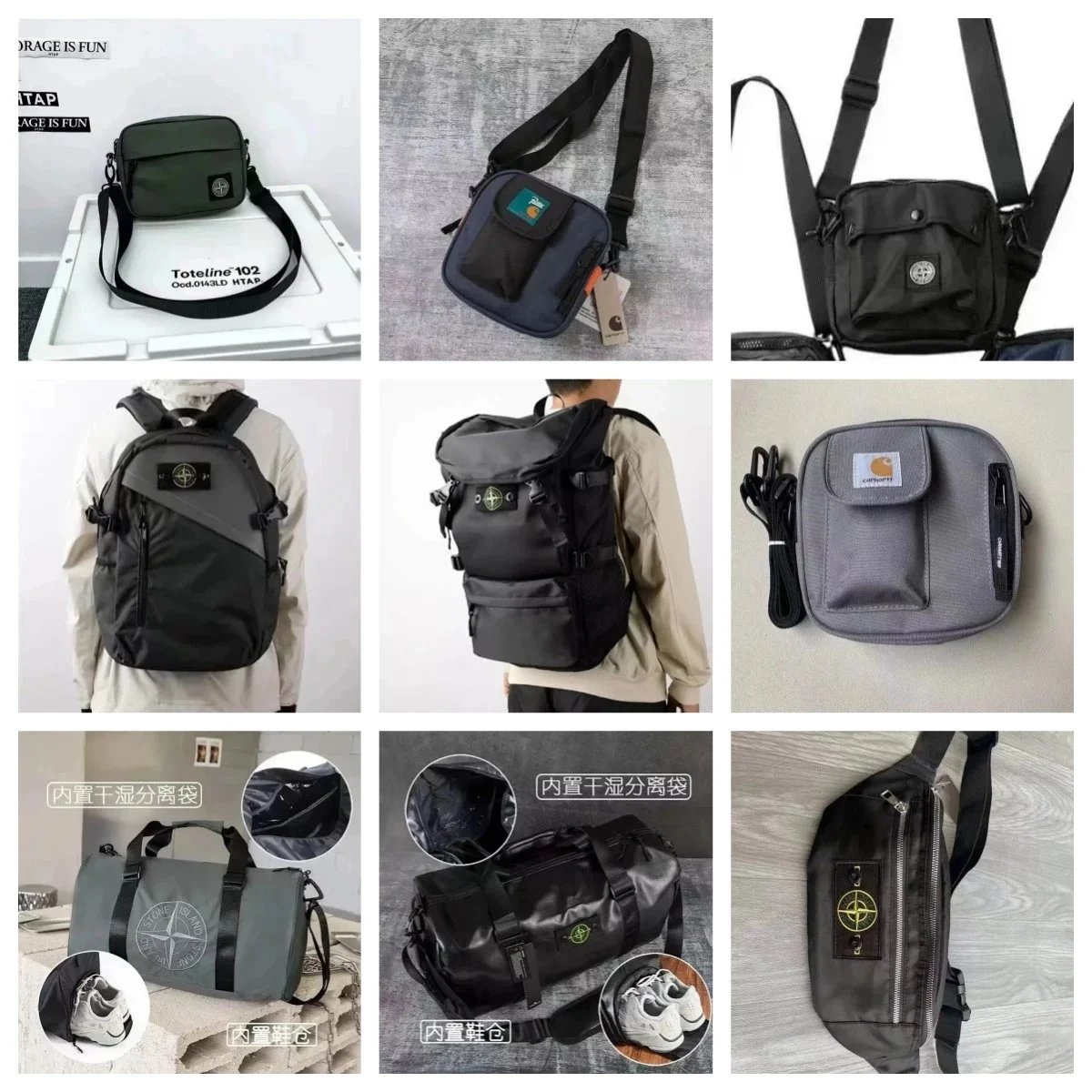
Stone Island Toteline 102 Crossbody Bag Olive Green with Compass Logo - 131706

REWIND Pixel-Print Black Long Sleeve Sweatshirt with Oval Logo - 134652

Neymar Jr #11 White Soccer Jersey with BMG Sponsor Logo - 133431

Dsquared2 ICON Distressed Black Denim Jeans with Graphic Print - 134709